


Ceasefire MultiMax L-ion: The Future of Modern Fire Fighting


In today’s evolving fire risk landscape, one truth is becoming increasingly clear: fires are no longer predictable, isolated, or single-class events.
In most real-life situations, one type of fire often triggers another. A small spark in one area can quickly spread and set off different kinds of fires at once. A short circuit (Electrically Started Fire) ignites paper (Class A), and the flames quickly spread toward flammable liquids (Class B) and so on.
The New Emerging Threat- Class L Fires
Lithium-ion batteries are now embedded across modern life- electronic devices, electric vehicles, power tools, etc. But when they fail, they can enter thermal runaway, releasing flames, and are difficult to suppress because:
• Lithium‑ion fires don’t fit neatly into existing classes (A/B/C/ESF/F).
• Due to thermal runaway, they reignite and show high‑temperature metal reactions.
• Traditional extinguishers often fail to suppress or cool the cells sufficiently.
And in such fire emergencies, using the wrong extinguisher can be a fatal mistake.
Recognising this critical gap, leading standard bodies like NTA, ISO, and BSI have now formally acknowledged Class L fires as a distinct and serious fire category.
The Problem with Traditional Fire Protection
Fire safety systems today are still built around segregation:
Class A → solids
Class B → liquids
Class C → gases
Electrically Started Fires → separate category
Class F → cooking oils
Each requires a different extinguisher and different decision-making under pressure.
Now add Class L fires into the picture.
This creates a serious problem:
Multiple extinguishers in one space
Higher training complexity
Increased risk of wrong extinguisher use
Slower emergency response
In real-world fire scenarios, you don’t get time to choose correctly.
Introducing MultiMax: Built for Class L Fires + More
Ceasefire MultiMax L-ion is engineered to tackle the most fierce Lithium-ion battery fires along with the conventional fire classes, with a universal green agent.
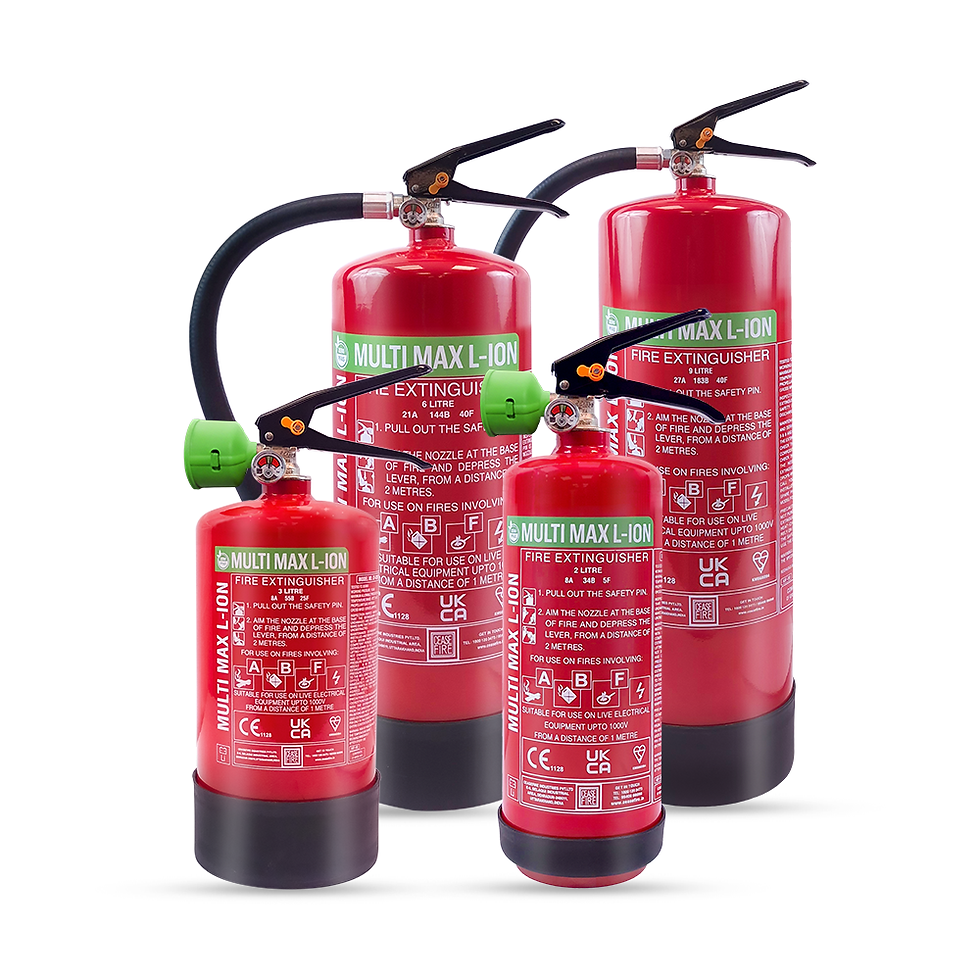
One Extinguisher. All Fires. Complete Control.
MultiMax is designed to tackle:

Lithium-ion battery fires- Class L fire risks

Class A fires (solid combustibles)

Class B fires (flammable liquids)

Class C (flammable gases)
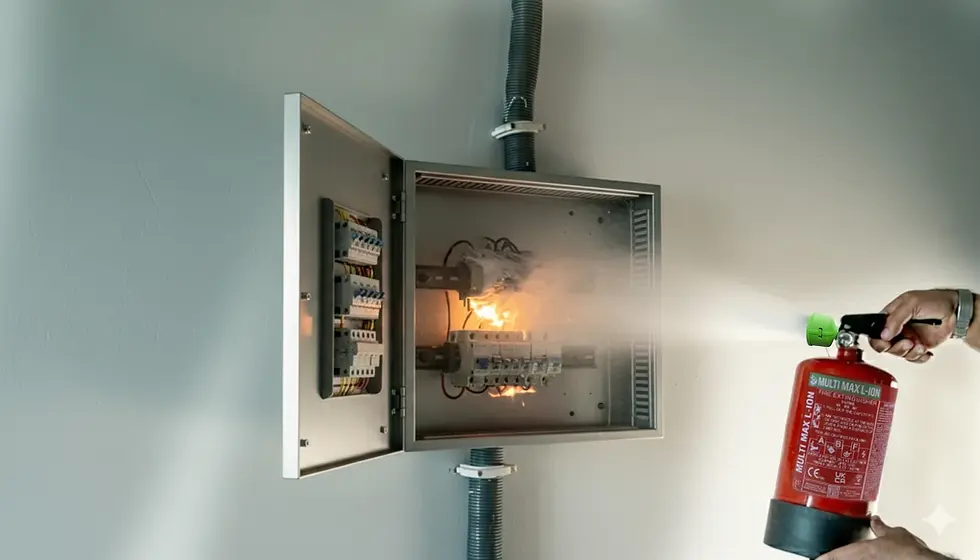
Electrically Started Fires (ESF)

Class F (cooking oil fire
This is not just an ordinary extinguisher.
This is a complete shift from segmented protection to unified response.
Certified for the Most Critical Risk: Lithium-ion Fires
MultiMax is tested to NTA 8133 A1:2025

What does this mean?
One of the most rigorous lithium-ion fire testing standards.
Recognised by the British Standards Institution (BSI) as the current reference framework.
The closest precursor to the upcoming BS EN 3-11 standard for lithium-ion fire extinguisher testing.
This means MultiMax is not just “compatible” with lithium-ion battery fires,
It is technically validated to handle them.
The Real Reason Class L + Multi-Class Protection Matters
Because lithium-ion fires are rarely standalone incidents.
A battery fire can:
Ignite surrounding materials (Class A)
Spread to liquids (Class B)
Impact electrical systems
Trigger multi-point fire escalation
MultiMax L-ion ensures:
👉 You don’t need to identify the fire first
👉 You don’t need multiple extinguishers
👉 You don’t lose time deciding
You act immediately. And correctly.
Safer for People. Smarter for Modern Spaces
MultiMax is designed not just for performance, but for real-world usability and safety:
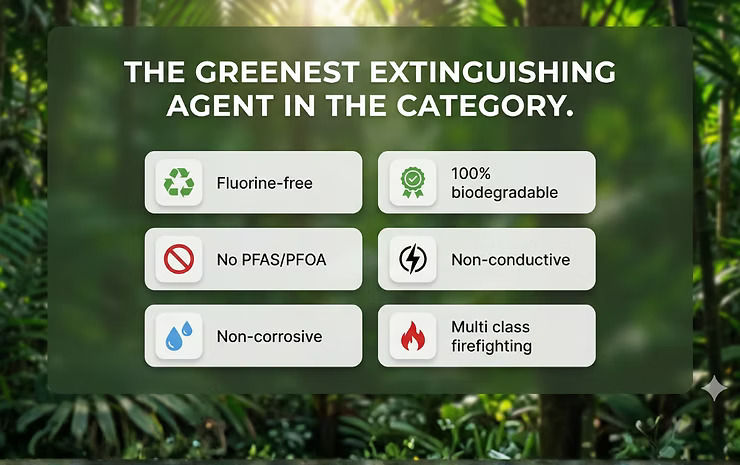
MultiMax L-ion is designed not just to fight fires, but to protect people and spaces.
It does not displace oxygen like CO₂, making it safer for use in enclosed environments.
It does not create blinding powder clouds that cause panic, breathing distress, or loss of visibility.
It is non-conductive and can be used on fires on live electrical equipment.
This makes MultiMax particularly suited for modern living spaces, offices, transport hubs, hospitals, data centers, commercial kitchens, and manufacturing facilities.
The Bottom Line
If your current fire safety setup:
Relies on multiple extinguishers
Depends on correct human decision-making under stress
Is not prepared for lithium-ion fire risks
Then it is no longer future-ready.
Upgrade to Smarter Fire Protection

With Ceasefire MultiMax, you’re not just adding an extinguisher to fight the most hazardous Class L fires;
You’re eliminating confusion, reducing risk, and preparing for the fires of today- and tomorrow.


Comments